We need to talk about lenses
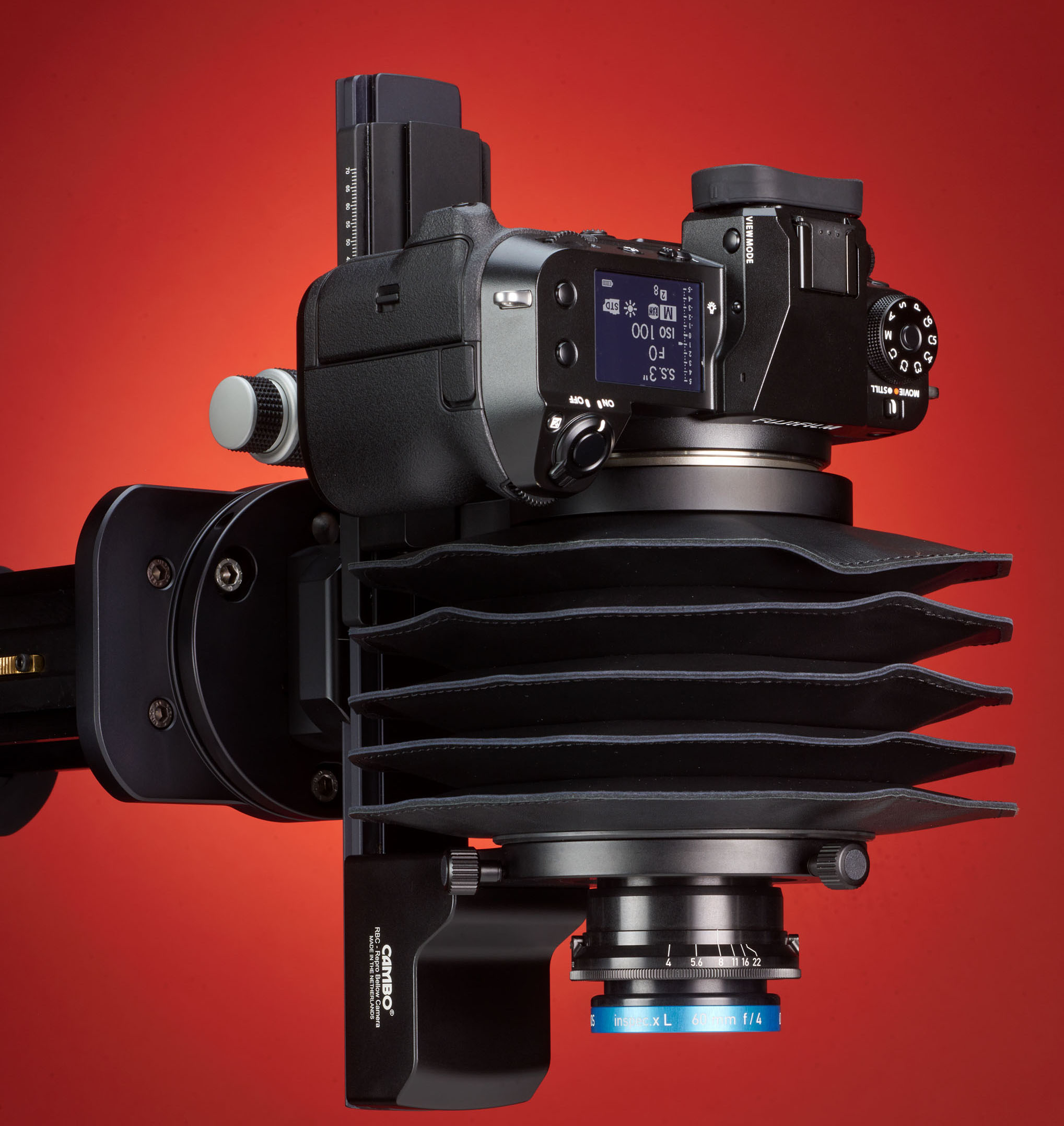
A few weeks ago we introduced a new camera for the archival industry, the Cambo RBC. It combines the stability of a pancake camera with the kind of flexibility only a bellows can offer. No matter which lens you'd like to use or how much extension the magnification requires, the RBC is the stable platform for it.
The beauty of a camera like this is its modularity. The front standard's V-Groove accepts all kinds of lens adapters. High quality art reproduction and film digitisation require dedicated lenses. Some of these lenses only deliver their optimum performance in a limited range. In that range however, they are excellent. Let's look into this.
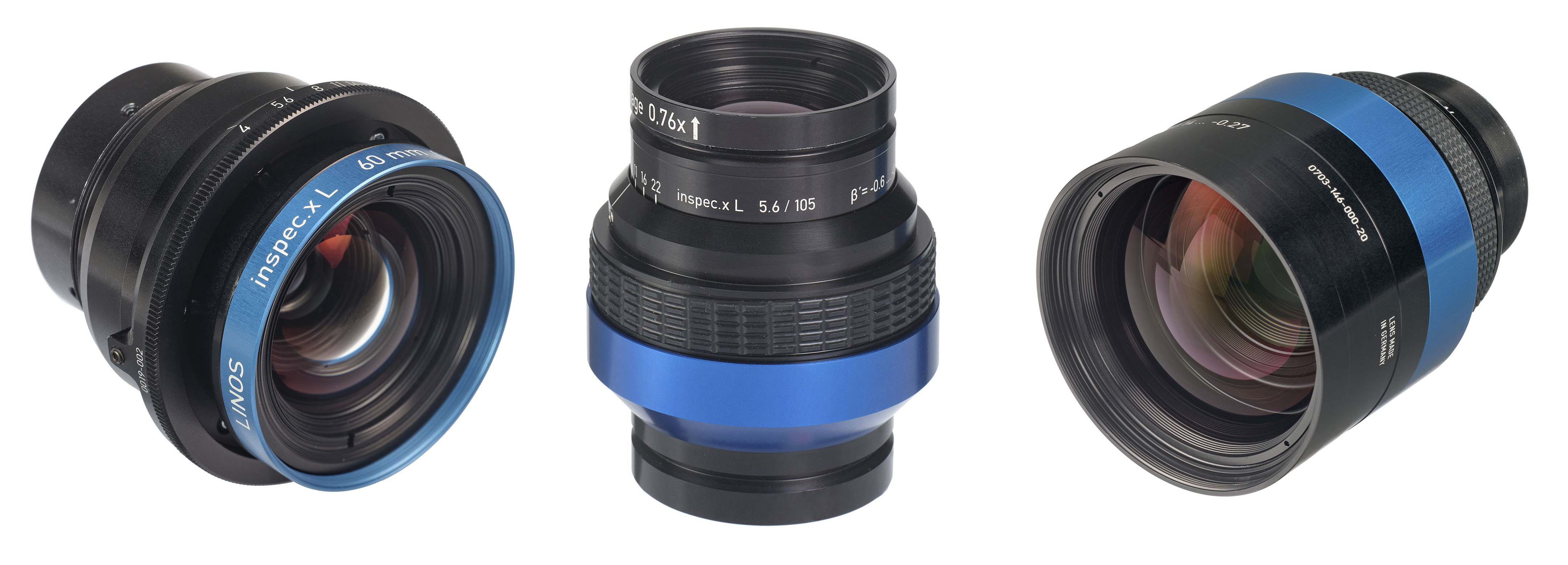
Until recently Rodenstock* supplied their HR-Digaron 5.6/105 Macro. A lens with a manually adjustable floating element to optimise it for the desired magnification ratio. In this leaflet is some more information about it. At first we were pretty disappointed to hear about its discontinuation. Testing some alternatives was very reassuring though. We assessed the following lenses: Linos* Inspec.x L 4.0/60, Linos dFine HR-M 2.8/80 0.09 and 0.2x and the Linos Inspec.x L 5.6/105 in its various incarnations. The latter's design is related to the aforementioned HR-Digaron 105 Macro. Without the floating element.
*This well-known brand name is still used for the line of Digaron lenses. The manufacturer's name is Excelitas. Their lenses for industrial applications bear the Linos designation.
First of all, it's not on us to advise the latest and greatest lenses for every application. An older Schneider Macro-Symmar may yield very good results. The Apo-Rodagon 90 is a capable lens for film digitisation and still available brand new at a moderate price. That's why we also offer M39 lens plates for our RPM helical focusing mounts and RBC repro cameras.
However, to meet the highest quality levels as outlined in the Fadgi, Metamorfoze and ISO 19264 guidelines good glass is a necessity. Arthur Stauder, product manager at Excelitas, explains: "The Apo-Rodagon line has been designed for pixelsizes of 5-7µm. It's a reliable choice for many applications. The more recent Inspec.x L series can handle pixel sizes of 3.5-5µm. The dFine HR lenses are future proof, meeting the requirements of sensors with pixel sizes as small as 2.5µm".

Quality is measurable. After all that's the reason we have the aforementioned guidelines. Test targets of various sizes can be captured at the PPI needed according the standard. To analyse the files you may get your own software. Phase One made it more accessible by offering their cloud-based analysis service called NimbusQA. Create an account, simply upload the file and within minutes it generates a report.
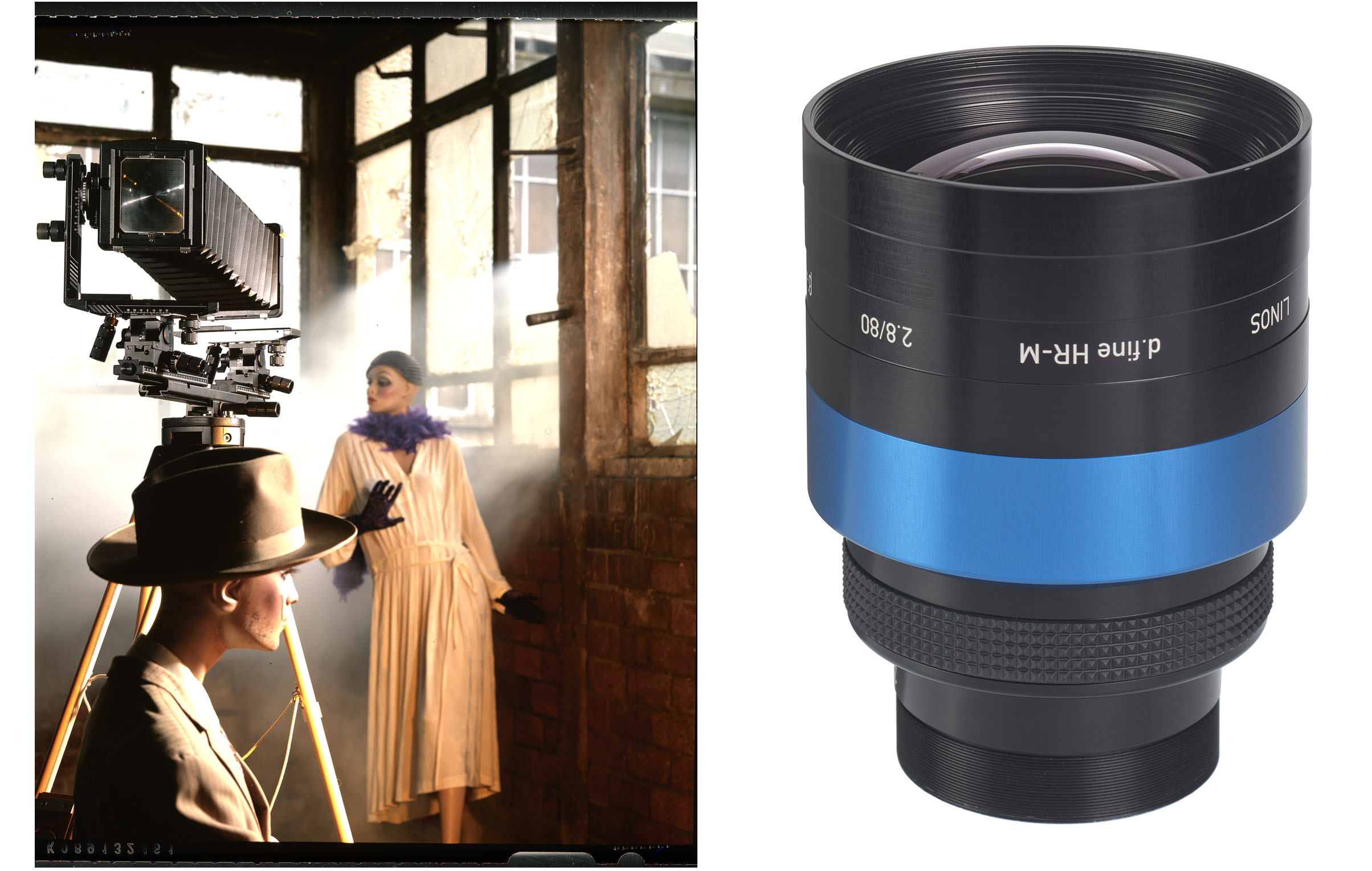
Back to the lenses. The dFine HR-M 2.8/80 is available in 0.09 and 0.2x versions. To distinguish them you've got to look twice at the engraving.
There are distinctions in the results though. A 600PPI file captured with the 0.09 version gets a Fadgi**** score. Repeating the same test with the lens' 0.2x counter part and we lose a star. As was to be expected. The 0.2 version was optimised for higher magnification ratios, not for art work or documents with a diagonal between 160 and 50cm but rather for larger film sizes, like 4x5" - 8x10". And indeed, repeating the test at 1500PPI gives the 0.2x version a Fadgi**** score.
The data sheet specifies the dFine's image circle as 62,2mm. That's rather small for use with a Phase One back, but Linos seems to err on the conservative side here. Even at infinity the lens only shows minimal light fall-off wide open. Stopped down to f5.6 the image is completely clean. Although it remains good practice to use a Flat Field Calibration. This Blog by Brad Kaye describes how to.
The Linos Inspec.x L 5.6/105 comes in no less than four versions. And there's another unique feature to these lenses as well: The mount enables you to reverse the lens, which effectively reverses the optimum magnification ratio of the design as well. There are two arrows engraved at the barrel, each with an indicated magnification ratio.
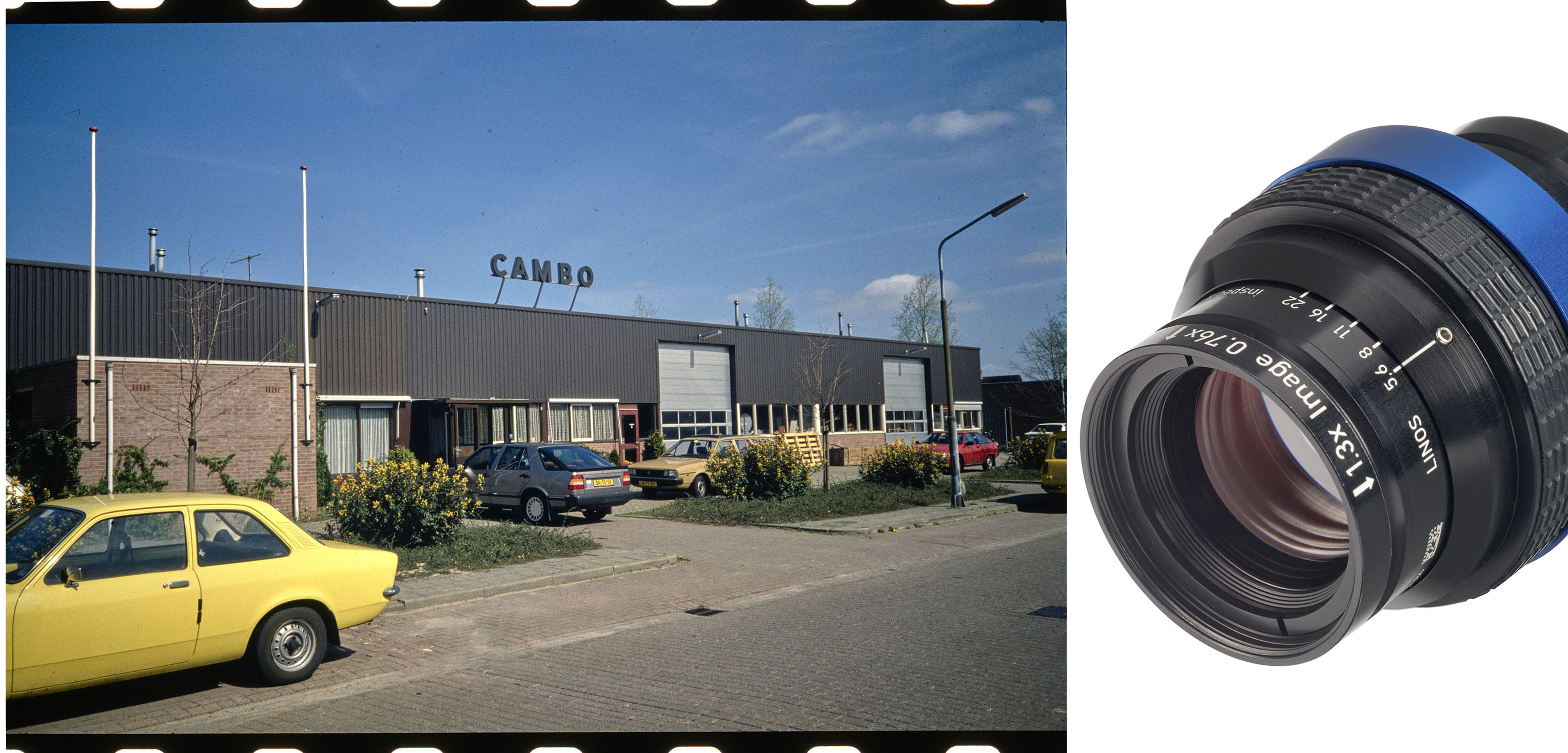
The 0.76x version of the 105 turned out to be an excellent lens to digitise 35mm film. Using a Phase One IQ4 150 megapixel back results in a 9000PPI capture. The lens actually covers a broader range than expected. It still gives superb results for 120 film and handles 4x5" film well. For larger film sizes the dFine HR-M 80 0.2 is the better choice.
Our recommendations:
- Inspec.x L 4.0/60 for documents and art work - diagonals 60cm and larger
- dFine HR-M 2.8/80 0.2x for smaller documents and art work and film sizes of 4x5" and larger
- Inspec.x L 5.6/105 0.76x for 35mm - 4x5" film sizes
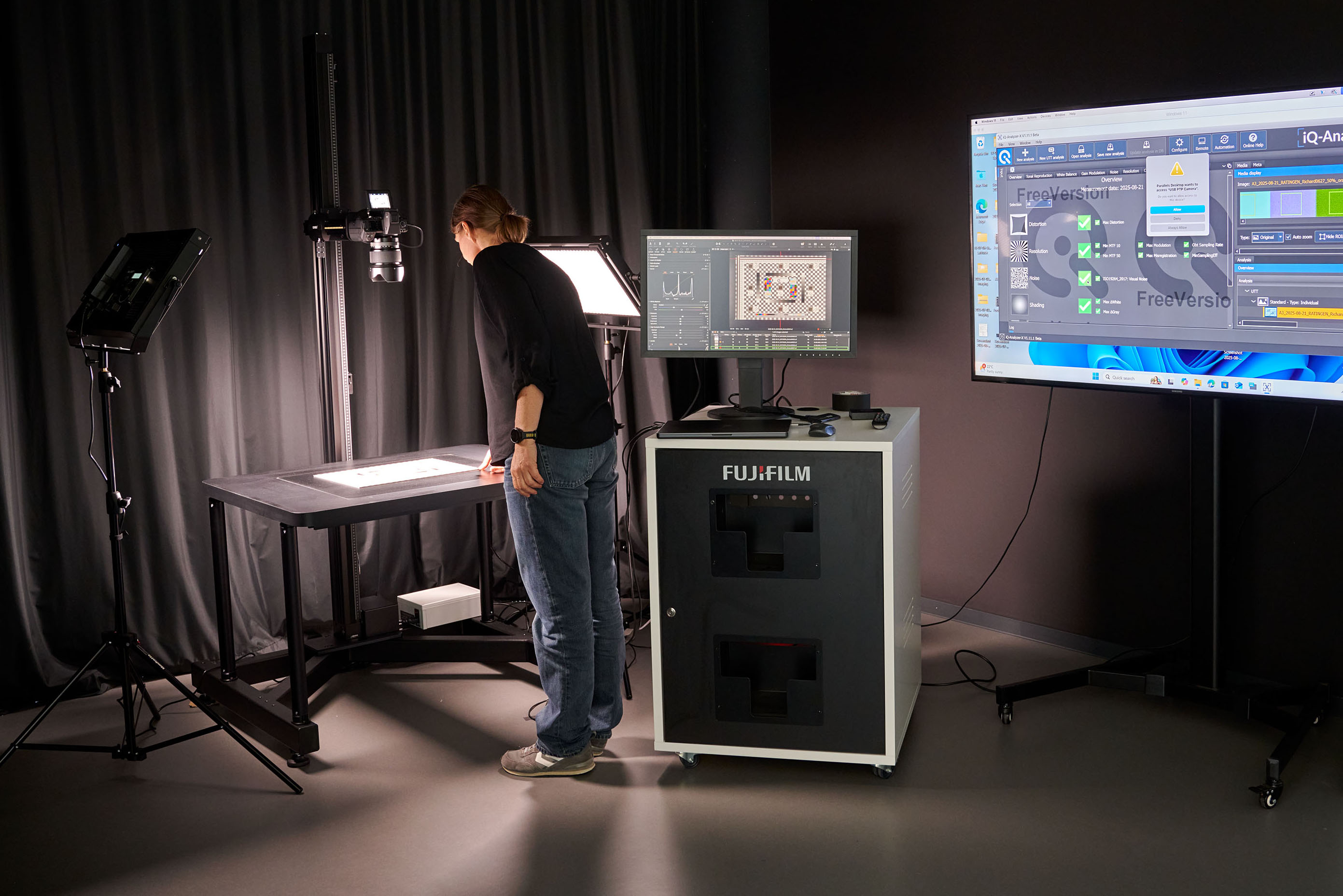
At Fujifilm's European HQ in Ratingen, Germany. The "Tech Raum" is equipped with a Cambo RPS-255 motorised copy stand and Akurat D8 LEDs. Not shown in the picture is the Cambo RPS-500 film stage. For testing they rely on Image Engineering charts and software. It enables them to do a full analysis to see which ISO-19264 (the European standard) levels a certain solution can achieve.